Bring a stage home on heat tiles
Tile the side of a stage, fall with that side into the wind, and land a tank you would otherwise have thrown away.
A crash refunds nothing and a recovery refunds everything still aboard, so a stage that survives its own re-entry is a stage you stop paying for. Heat Tiles are what make that possible: they shield whatever they lie over and they are never used up.
- You have bought Reusable Heat Tiles on the tech tree.
- The stage you mean to land can slow itself down and come to rest: a canopy, legs, or fuel left for the last of it.
Steps
- In the hangar, drag a strip of Heat Tiles onto the flank of the tank. It sits on the side rails like a fin or a landing leg, anywhere down the flank.
- Drag its Length slider until the strip covers the whole side you mean to fly into the wind. A strip only shields what it lies over, and the longer it is the harder it holds the ship there.
- Put the hold in a stage. Tap Stages, pick the stage that will run during the descent, select the strip and add it — the picker offers Tiles into wind. You can skip this and do it by hand in flight instead.
- Fly the mission. Leave the hold OFF for the climb: it would fight you all the way up.
- Before you touch the air on the way back, turn the ship so the tiles lead, then tap the strip and tap Hold into wind (or fire the stage you set up). The tiles swing into the airstream and stay there.
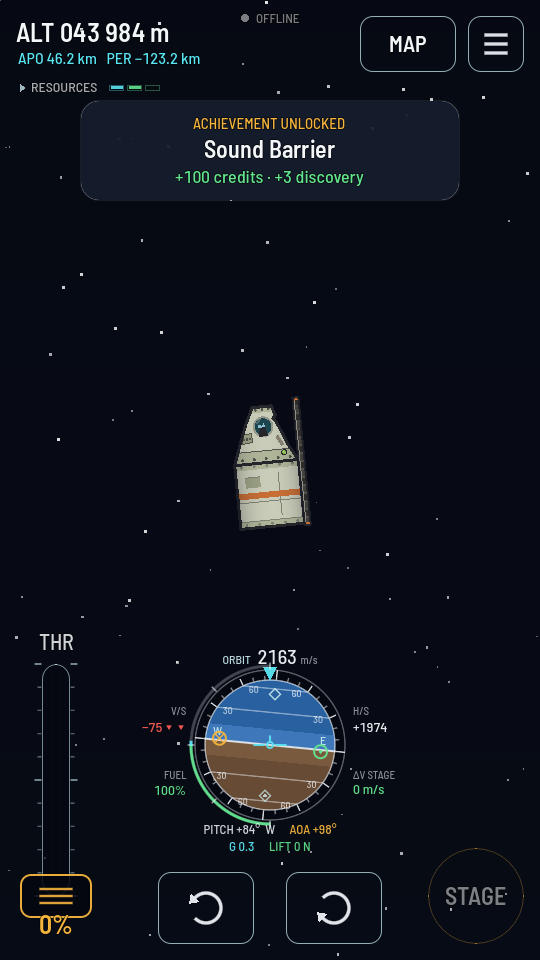
Held flank-first, with the tiles taking the heating. - Ride it down, then land as usual and use RECOVER from the flight menu once the ship is standing still (Recover a landed ship).
What you should see
The ship falls sideways instead of turning to fly end-first, and stays that way without you touching the controls. The tank behind the tiles never heats at all — no glow, no plasma streaks, no breaking up — while the strip itself warms and glows, which is exactly what it is for. Everything that lands is refunded at recovery, tiles included, and the same strip can fly again tomorrow.
Careful
Tiles shield only what is behind them. A capsule or an engine sticking out past the ends of the strip is in the airflow on its own, and a strip turned edge-on protects nothing at all. If the ship tumbles, the hold has slipped: a longer strip, or a second one, holds harder.